

The best mesh Wi-Fi systems of 2026
These are the best routers we tested that can up your home Wi-Fi game.

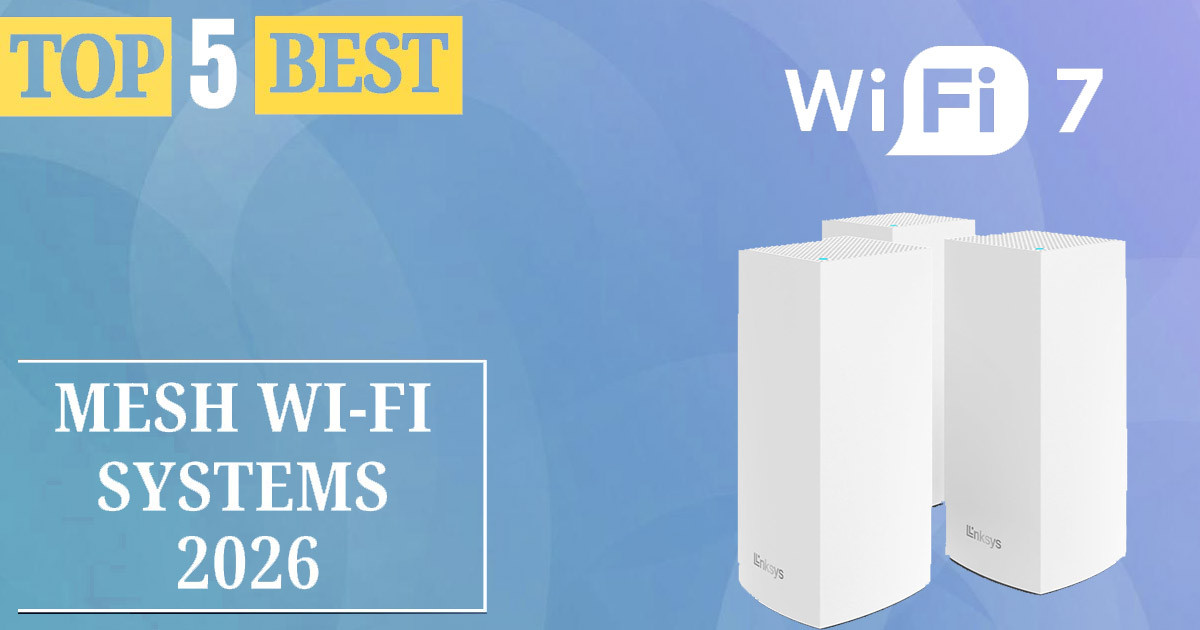
The Best Mesh Wi-Fi Systems for Fast Home Internet in 2026
Wi-Fi dead zones are a thing of the past. As our homes and lives become more connected, the demand for strong, reliable internet across every corner is huge. A single router often struggles to keep up when you stream 8K video in the basement or join meetings from the garden. Mesh Wi-Fi systems are the answer. They send signals through your house to stop buffering and dropped connections. This guide will show you the top mesh Wi-Fi systems that will rule the market in 2026, ensuring your digital life flows without issues.
Choosing the right mesh setup means getting better work, play, and smart home control. With tech moving fast, new gains in speed and range are here. We looked at the market to find systems that offer top speed and simple setup. This makes advanced networking easy for everyone to use.
Achieve Whole-Home Coverage Without Compromise
Wi-Fi should be available in every room, not just near the modem. Traditional routers send a signal out, but the strength fades the further you get from the device. Mesh kits solve this by using multiple points to keep the signal strong everywhere.
Eliminate Wi-Fi Dead Zones and Buffering
Mesh systems work by creating a grid of nodes that talk to each other. Instead of one signal source, you have a web of coverage. The main node plugs into your modem, and satellite nodes sit in other rooms to pick up and boost the signal. Your phone or laptop connects to the closest node for the best speed. This is different from extenders, which often cut your speed in half and create a messy network name list. True mesh technology creates one single network name for your whole house.
Understand Network Speed and Performance Metrics
When you shop for a new system, look at the speed standards. Wi-Fi 7 is the current standard in 2026, offering massive jumps over older versions like Wi-Fi 6. Look for systems that support multi-gigabit speeds if you have a high-tier internet plan. Theoretical top speeds are great, but focus on real-world throughput. If you pay for 1 Gigabit internet, your mesh nodes should have 1 Gigabit or 2.5 Gigabit ports to match that speed.
Future-Proof Your Home Network
You want a system that can handle the growing number of gadgets in your home. Smart lights, cameras, phones, and TVs all compete for bandwidth. Choose a mesh system that supports high device counts without slowing down. Look for features like tri-band or quad-band support. This creates extra "lanes" for your traffic, keeping your streaming smooth even when the kids are gaming online.
Uncover the Top-Performing Mesh Wi-Fi Systems of 2026
The market is full of choices, but a few stand out for their mix of power and ease of use. These systems are the top picks for different types of users.
System A: The Speed Demon for Power Users
The TP-Link Deco BE95 is the king of speed for 2026. This system supports the latest Wi-Fi 7 standard, known as 802.11be. It is perfect for gamers and streamers who need every ounce of speed their ISP provides. With multi-gigabit ports on every node, you will not hit a bottleneck with a wired connection. It delivers consistent performance across a large floor plan, even through thick walls.
Unrivaled Speeds and Latest Wi-Fi Standards
This system uses a quad-band design to maximize traffic flow. By using the 6GHz band, it keeps high-demand devices away from the slower 2.4GHz bands used by smart home gadgets. Real-world tests show it can easily handle multiple 8K video streams at the same time. The total throughput capacity is among the highest available this year.
Advanced Features for the Tech-Savvy
You get a dedicated backhaul for communication between nodes, which keeps the main Wi-Fi lanes open for your devices. The app includes deep Quality of Service (QoS) tools to give your gaming PC or work computer priority. It also features robust security scans to keep your network safe from threats.
System B: The Smart Home Integration Master
The Amazon Eero Max 7 is the best choice if you live in a smart home. It is built to work with Alexa and other smart platforms. Setting it up is fast, taking only a few minutes through the mobile app. The interface is clean and shows you exactly which devices are using the most data.
Effortless Setup and Intuitive Mobile App Control
You do not need to be a tech expert to manage this system. The app guides you through every step, from picking a spot for the node to checking your internet speed. If a node loses connection, the app sends a notification to your phone. It keeps things simple while giving you enough control to change basic settings.
Seamless Connectivity for All Your Smart Devices
The Eero handles IoT devices with ease. It organizes your smart light bulbs and locks on a separate band so they do not crowd your phone or PC. This keeps your smart home responsive. Even if you have fifty devices, the network stays stable and fast.
System C: The Budget-Friendly Coverage Champion
The ASUS ZenWiFi XT8 offers a great balance of price and range. It is not the newest on the list, but it remains a top value choice in 2026. You get three nodes in some packages, which is enough to cover a large house with no dead zones. It is a solid workhorse that does not sacrifice performance for a lower price.
Comprehensive Coverage at an Accessible Price Point
For the cost, few systems cover as much square footage as this one. It is built for houses with multiple floors or complex layouts. The nodes are fairly small and can be placed on a bookshelf or desk without drawing attention. You get high-end features like guest networks and parental controls without paying a premium.
Reliable Performance for Everyday Internet Needs
It handles 4K streaming and video calls without issue. If your home has standard internet speeds around 500 Mbps, this system will never be the bottleneck. It provides a stable base for a family household where everyone is online at the same time.
System D: The Compact and Discreet Solution
The Linksys Velop Micro is perfect for smaller homes or apartments where you want the tech to blend into the decor. The nodes are tiny and have a clean white finish. They look more like home decor than network equipment. You can tuck them away in a corner, and they will still put out a strong signal.
Stylish Design Meets Powerful Wi-Fi
Most routers are big and ugly, but these are small enough to sit on a coffee table. They don't have large antennas sticking out, yet they pack enough power for a mid-sized apartment or condo. They are easy to mount on walls if you want to keep them off surfaces.
Efficient Performance for Mid-Sized Dwellings
Even with their small size, they use effective antenna arrays to beam signal through standard walls. They are best for spaces around 1,500 to 2,000 square feet. The setup is fast, and they work well with other Linksys products if you decide to add more nodes later.
Key Considerations When Selecting Your Mesh System
Before you buy, look at your specific needs. Not every house needs a top-tier speed demon.
Evaluating Your Home's Size and Layout
First, measure your home. A single node can cover about 1,000 to 1,500 square feet. If you have a two-story home with a basement, you likely need a three-node kit. Also, think about your walls. Brick and concrete are bad for Wi-Fi, while drywall is easy for signals to pass through. Place nodes in sight of each other if possible to keep the backhaul speed high.
Understanding Your Internet Service Plan and Speed Needs
Match your gear to your plan. If your ISP gives you 300 Mbps, buying a multi-gig router is overkill. However, if you have fiber internet at 2 Gigabits, you need hardware that supports it. Think about your habits too. If you are a casual browser, a cheaper system is fine. If you download large files or game daily, get a high-end system with 6GHz support.
Budget and Future-Proofing Investments
A good mesh system should last three to five years. Spending more now can save you money later. Look for systems that support the latest standards, like Wi-Fi 7, because more devices will use it in the coming years. Consider the price per node versus the total coverage you get. Often, buying a kit is cheaper than buying single nodes later.
Maximizing Your Mesh Wi-Fi Performance
Once you install your new gear, a few tweaks can make a big difference.
Optimal Node Placement Strategies
Do not hide your nodes inside cabinets. Wi-Fi signals get blocked by metal and thick wood. Keep nodes on open shelves or tables. For the best result, put them in a central spot of the room, not tucked in a corner. If you have a two-story house, place one node on each floor, but try to keep them somewhat aligned vertically.
Managing System Features for Enhanced Performance
Most modern apps have a Quality of Service, or QoS, setting. Use this to prioritize your work computer or your game console. If you have frequent guests, turn on the guest network feature. This keeps their devices away from your main data and keeps your home network secure.
Maintaining a Secure and Stable Network
Always check for firmware updates. These updates fix security holes and can sometimes add speed. Most mesh apps do this automatically if you turn on the setting. Also, use a strong password for your network that is not easy to guess. Change it every six months to stay safe.
The Future of Mesh Wi-Fi: What's Next in 2026 and Beyond
Wi-Fi is getting smarter every year. The focus is shifting toward systems that manage themselves.
Integration with AI and Smart Home Ecosystems
Expect to see more AI built into your router. Future systems will detect when your kids are gaming and when you are on a video call, then shift bandwidth to whoever needs it most. They will heal the network by re-routing traffic if one node starts to fail. This is all happening behind the scenes to keep you online.
Enhanced Security and Cloud Management
Security is moving to the cloud. Your router will check incoming data for threats before it hits your laptop or phone. This means you do not have to install security software on every single device. Remote management will also get better, allowing you to control your home network from anywhere in the world.
Conclusion
Your home network deserves to be as powerful and reliable as your ambitions. By picking one of the top mesh Wi-Fi systems of 2026, you gain better performance and the freedom to connect without limits. Whether you are a remote worker needing clear video calls or a gamer who cannot afford lag, the right mesh system changes the game. It ensures every corner of your home is a spot for great internet. Do not settle for dead zones when a simple upgrade can fix your connection for good.
What's Your Reaction?
 Like
0
Like
0
 Dislike
0
Dislike
0
 Love
0
Love
0
 Funny
0
Funny
0
 Wow
0
Wow
0
 Sad
0
Sad
0
 Angry
0
Angry
0










Comments (0)